Beyond Visual, Auditory, and Kinesthetic: What Neuroscience Actually Tells Us About How Students Learn
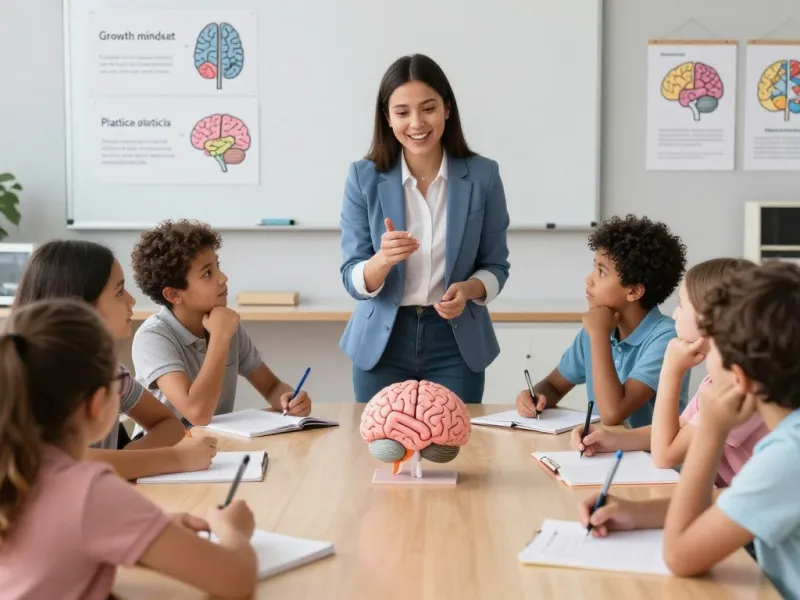
Photo: child student brain learning neuroscience colorful classroom study, via creditsforteachers.com
A Theory That Feels True — But Isn't
Ask almost any American parent how their child learns best, and there is a reasonable chance they will reach for one of three familiar labels: visual, auditory, or kinesthetic. The idea is intuitive, tidy, and deeply embedded in school culture. Entire curricula have been redesigned around it. Teachers have been trained to accommodate it. Parents have repeated it at dinner tables and in parent-teacher conferences for thirty years.
There is just one problem: the scientific evidence does not support it.
A landmark review published in Psychological Science in the Public Interest examined the core claim of learning styles theory — that students learn more effectively when instruction is matched to their preferred style — and found it wanting. The researchers noted that while individuals certainly have preferences for how information is presented, those preferences do not reliably translate into better academic outcomes when honored. In other words, a student who insists she is a visual learner does not necessarily retain more from a diagram than from a well-explained lecture. The match between style and method simply does not produce the learning gains the theory promises.
Yet the myth persists. And for parents trying to help their children succeed, that persistence matters — because chasing the wrong explanation for a child's struggles can delay finding the right one.
What the Brain Actually Does When It Learns
Neuroscience paints a picture of learning that is far richer, and frankly more hopeful, than a three-box sorting system. The brain does not operate in isolated channels. When a student reads a word, processes a musical pattern, or solves a geometry problem, multiple regions of the brain activate simultaneously and communicate with one another. Learning is, at its core, a deeply interconnected process.
What researchers have identified as genuinely influential in how well students learn includes:
Prior knowledge. The brain learns new information by anchoring it to what it already knows. A student who has a solid foundation in fractions will acquire algebra concepts far more readily than one who does not — regardless of whether she prefers videos or textbooks.
Cognitive load. Every learner has a limit to how much new information working memory can process at once. Effective instruction — and effective tutoring — manages that load deliberately, introducing concepts in sequences that do not overwhelm the system.
Emotional and motivational context. The brain's limbic system, which governs emotion, is tightly coupled with memory formation. A student who feels anxious, embarrassed, or disengaged in a subject encodes information less effectively than one who feels safe, curious, and supported. This is not a minor footnote; it is a central finding.
Retrieval practice and spaced repetition. Decades of memory research confirm that how students review material matters enormously. Re-reading notes is among the least effective strategies. Testing oneself, spacing study sessions out over time, and interleaving different subjects produce significantly stronger long-term retention.
None of these factors map neatly onto visual, auditory, or kinesthetic categories. They describe processes happening across all learners, all the time.
So Why Does My Child Struggle With Certain Subjects?
This is the question most parents are really asking when they reach for learning style labels. If a child consistently underperforms in reading but excels in hands-on science projects, something real is happening — even if the VAK framework does not explain it accurately.
The more productive questions to ask are:
- Does my child have a gap in foundational skills — such as phonics, number sense, or writing mechanics — that makes a subject harder than it needs to be?
- Is the instructional pace at school moving faster than my child's current level of mastery?
- Are anxiety, attention challenges, or low confidence creating interference that looks like a learning style mismatch but is actually an emotional or executive-function issue?
- Is the material being presented in a way that connects to what my child already cares about and understands?
These are answerable questions. They point toward specific, actionable interventions rather than broad stylistic preferences.
What Personalized Learning Actually Looks Like
At The Wise Owl Tutoring Center, the word personalized carries a precise meaning. It does not mean sorting students into categories and delivering content accordingly. It means beginning with a thorough understanding of where a student currently is — their existing knowledge, their gaps, their pace of processing, and the emotional landscape they bring to academic work — and building instruction from that foundation.
Evidence-based personalization includes:
Diagnostic assessment before instruction. Understanding exactly where a student's mastery breaks down allows a tutor to target the specific concepts causing difficulty, rather than reviewing material the student already understands.
Explicit instruction paired with guided practice. Research consistently supports the effectiveness of clear, direct explanation followed by opportunities to apply the concept with feedback — a structure that benefits all learners, regardless of any stylistic preference.
Building metacognitive awareness. Students who understand how they learn — who can recognize when they are confused, when they are guessing versus knowing, and which study strategies actually work — outperform peers who rely on intuition alone. Teaching students to think about their own thinking is among the most durable gifts an educator can offer.
Consistent, low-stakes feedback. Frequent, specific feedback accelerates learning in ways that periodic high-stakes testing cannot. A student who receives immediate, constructive responses to their work builds understanding incrementally and corrects misconceptions before they calcify.
A More Useful Conversation to Have With Your Child
Rather than asking your child whether she is a visual, auditory, or kinesthetic learner, consider asking different questions. What part of this subject feels confusing? What does it feel like when something finally makes sense to you? What does a teacher or tutor do that helps you the most?
These questions open a genuine dialogue about learning without locking a child into a category that may limit rather than liberate her.
The brain is not a fixed instrument tuned to one frequency. It is adaptive, context-sensitive, and responsive to good instruction. The most powerful thing any parent or educator can do is approach each student with that understanding — and resist the temptation to simplify the remarkable complexity of human learning into a tidy, marketable label.
At The Wise Owl Tutoring Center, we believe every student deserves instruction grounded in what the science actually says. That commitment begins with asking better questions — and it does not stop until every student reaches their potential.