When Excellence Isn't Enough: The Hidden Academic Struggles of High-Achieving Students
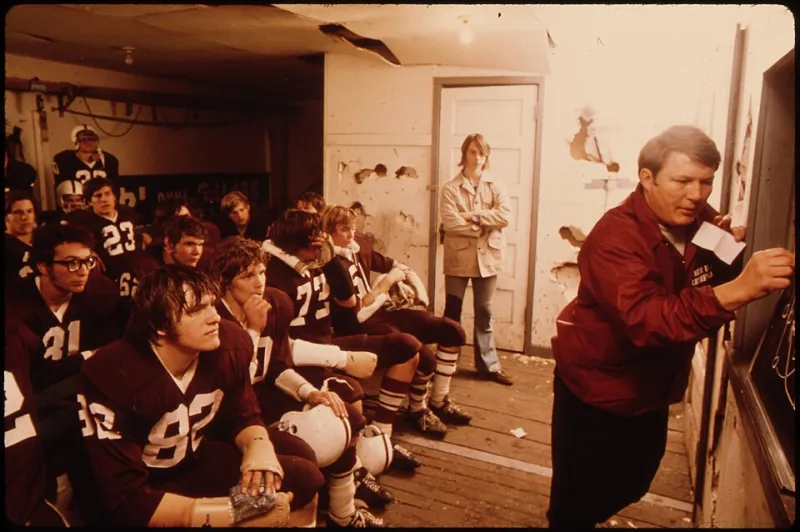
Photo: Art Hanson, Public domain, via Wikimedia Commons
The Student Nobody Worries About
She turns in every assignment on time. Her GPA is impeccable. Teachers describe her as a pleasure to have in class. Her parents feel proud — and largely unconcerned.
And yet, at eleven o'clock on a Sunday night, she is quietly unraveling over a history essay that she has rewritten four times. Not because she does not understand the material, but because nothing she produces feels adequate. The internal standard she has set for herself is, functionally, unreachable. And no one around her knows, because the grades keep coming in and the accolades keep accumulating.
This student exists in schools across the United States, in every grade level and every demographic. She is the student nobody worries about — and that, in itself, is cause for concern.
The Misconception That Tutoring Is Remedial
The dominant cultural narrative around tutoring frames it as an intervention of last resort. A student falls behind, a parent panics, a tutor is called in. The implicit assumption is that academic support is something students graduate out of once they reach a certain level of performance.
This framing does a disservice to students at both ends of the achievement spectrum — and it is worth examining honestly.
Tutoring, at its best, is not remediation. It is personalized intellectual partnership. It is a structured relationship in which a knowledgeable, attentive educator focuses entirely on one student's growth — not the growth of a class of twenty-eight, not the growth of a standardized test cohort, but this specific student, with her specific strengths, gaps, and goals.
That kind of relationship is valuable for every student. For high-achieving students, it can be genuinely transformative.
Perfectionism: The Invisible Academic Burden
Research on perfectionism in academically gifted students reveals a troubling pattern. Students who have consistently earned high marks often develop an identity that is tightly coupled with their performance. Achieving becomes not merely a means to an end but a core component of self-worth. The result is a student who is not learning to learn — she is learning to perform.
The distinction matters. A student oriented toward performance avoids intellectual risk. She gravitates toward assignments she knows she can execute flawlessly and steers away from challenges that might expose uncertainty. Over time, this avoidance quietly hollows out the very curiosity and resilience that sustained learning requires.
A skilled tutor can interrupt this pattern in ways that a classroom setting rarely permits. In a one-on-one environment without the social stakes of peer observation, a high-achieving student can be encouraged — even invited — to be wrong, to guess, to try a strategy that might not work. That experience of productive struggle, conducted in a safe and supportive context, is not a step backward. It is the foundation of genuine academic confidence.
The Myth of the Seamless Achiever
High grades are a useful signal, but they are an imprecise one. A student can earn strong marks in mathematics while carrying a fragile conceptual understanding of certain foundational topics — gaps that remain invisible because she has developed compensatory strategies sophisticated enough to navigate most assessments. Until, one day, she encounters a course or a concept that her workarounds cannot handle.
This is a remarkably common experience among students transitioning from high school to college-level coursework, or from middle school to Advanced Placement classes. The academic terrain shifts, the difficulty escalates, and suddenly the student who never needed help finds herself without the tools to cope — and without the experience of having sought help before.
The irony is that these students are often the least equipped to ask for assistance. They have spent years being the one who has the answers. Admitting uncertainty feels, to many of them, like a betrayal of the identity they have worked to maintain.
Advanced Learners Deserve Challenge, Not Just Affirmation
There is another dimension to this conversation that deserves attention. Many high-achieving students are not merely keeping pace with their coursework — they have outpaced it. They sit in classes where the material does not challenge them, and they disengage not from difficulty but from boredom. Chronic under-challenge is its own form of academic harm.
For these students, tutoring serves an entirely different function. It provides intellectual extension — the opportunity to go deeper into a subject, explore adjacent ideas, engage with material that the standard curriculum does not offer. A student who is fascinated by molecular biology but whose school science class is still covering basic cell structure can, with the right tutor, begin exploring the field at a level commensurate with her actual interest and ability.
This kind of engagement is not a luxury. It is what keeps gifted students intellectually alive during the years when the classroom cannot always meet them where they are.
Burnout Is Not a Character Flaw
Academic burnout among high-achieving students has received increasing attention in recent years, and for good reason. The combination of rigorous coursework, extracurricular demands, college application pressures, and the relentless pursuit of an idealized transcript creates conditions that are genuinely exhausting — even for students who appear to be thriving.
Burnout does not announce itself dramatically. It arrives as a gradual dulling of motivation, a creeping sense that no amount of effort will be sufficient, a withdrawal from activities that once brought satisfaction. By the time it is visible to parents and teachers, it has typically been building for months.
A tutoring relationship, when structured thoughtfully, can serve as an early detection system. A tutor who works with a student regularly is positioned to notice shifts in engagement, energy, and attitude that a busy classroom teacher may not have the bandwidth to observe. That attentiveness can prompt timely conversations and, where appropriate, referrals to counselors or other support professionals.
Redefining What Support Looks Like
The Wise Owl Tutoring Center holds a firm conviction: academic support is not a signal of failure. It is a signal of self-awareness — the recognition that every learner, regardless of where they currently stand, has further to go and deserves a thoughtful guide for the journey.
For the high-achieving student, that guide might help her untangle perfectionism from genuine excellence. It might shore up the conceptual foundations beneath a polished academic surface. It might offer the intellectual challenge that her classroom cannot currently provide. Or it might simply be a consistent, caring presence that reminds her that her value is not reducible to her grade point average.
Every student deserves the opportunity to reach her potential — not just the potential her transcripts reflect, but the fuller, more complex, more human potential that lies beneath. That is the work we are here to support.