From Silence to Inquiry: Teaching Students the Art of Asking Better Questions
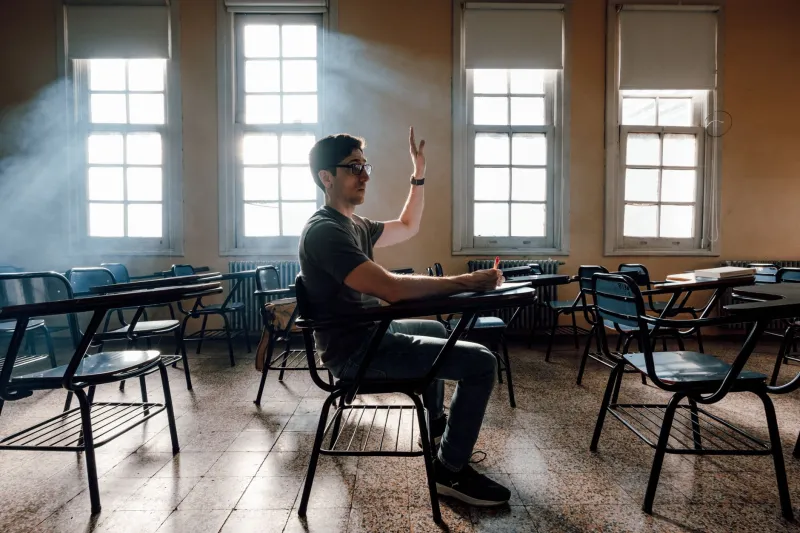
There is a moment many parents and tutors recognize immediately: a student finishes a lesson, nods along, and says they understand—only for it to become clear, minutes or days later, that something fundamental never landed. The material passed over them rather than through them. And yet, no question was raised. No confusion was flagged. The student simply absorbed the silence and moved on.
This is not a story about intelligence or effort. It is a story about a skill that formal education rarely teaches explicitly: the ability to ask a meaningful question.
In classrooms across the United States, students are evaluated almost exclusively on their capacity to produce correct answers. Quizzes, standardized tests, essays, oral recitations—all of these measure what a student can deliver on demand. Almost none of them measure what a student can ask. The result is a generation of learners who have been trained to perform comprehension without necessarily possessing it.
Why Students Stay Silent
Before addressing how to build the skill of questioning, it is worth understanding why so many students abandon it in the first place.
For younger students, the classroom environment often delivers an early and lasting lesson: asking a question that peers find obvious is socially costly. The mild laughter, the impatient sigh from a teacher pressed for time, or simply the fear of those reactions is enough to shut down inquiry in many children before they reach middle school. By high school, the habit of silence is frequently so entrenched that students no longer even register their own confusion as something worth voicing.
There is also a more subtle barrier: many students genuinely do not know how to formulate a question. Confusion is a feeling before it is a thought. Transforming that vague sense of "I don't get it" into a specific, articulable question requires a degree of metacognitive awareness—the ability to observe one's own thinking—that must be taught and practiced, not assumed.
Finally, some students have learned, often unconsciously, that asking questions invites scrutiny. In households or classrooms where authority is not comfortably questioned, curiosity can feel like a form of defiance. These students may be deeply engaged internally while presenting as entirely passive externally.
What Is Actually Lost
The consequences of this silence extend well beyond individual lessons. A student who cannot ask productive questions is, in a meaningful sense, dependent on others to determine what they need to know. They cannot effectively advocate for themselves in a tutoring session, navigate a confusing textbook passage, or identify the precise point at which their understanding breaks down.
Research in cognitive science consistently supports what skilled educators have observed for decades: the act of generating a question forces the brain to process information more deeply than passive reading or listening. When a student asks, "Why does this rule apply here but not in the previous example?" they are performing a sophisticated cognitive operation—comparing, contrasting, and identifying a gap. That process consolidates learning in ways that simply rereading a chapter does not.
In other words, question-asking is not merely a social or communicative skill. It is a learning skill of the highest order.
Building the Habit: What Parents Can Do at Home
Parents are often the first and most influential audience for a child's questions. The tone set at home—whether curiosity is welcomed, dismissed, or simply never modeled—shapes how freely a student asks questions everywhere else.
One of the most effective things a parent can do is ask questions themselves, openly and without pretending to know every answer. When a child observes a parent saying, "That's interesting—I actually don't know why that works that way. Let's find out," they absorb a powerful message: not knowing is the beginning of learning, not an embarrassment.
At the dinner table or during car rides, parents can invite their children to share not just what they learned in school that day, but what confused them, what surprised them, or what made them wonder. This reframes the goal of education away from the accumulation of correct answers and toward the cultivation of genuine understanding.
It is also worth helping children distinguish between different kinds of questions. A clarifying question ("What does this word mean?") is different from an analytical question ("Why did this character make that choice?") which is different again from a generative question ("What would happen if the opposite were true?"). Naming these distinctions, even casually, gives students a vocabulary for their own intellectual curiosity.
What Tutors Can Do in Sessions
A one-on-one tutoring environment is, in many ways, the ideal setting for developing question-asking skills. Unlike a classroom of thirty students, a tutoring session offers the safety and space for a student to voice half-formed thoughts without social consequence.
Effective tutors do not simply wait for questions to arise—they create structures that make questioning feel expected and natural. One approach is to build a brief "question inventory" into the beginning of each session: before reviewing new material, the tutor asks the student to identify one thing they found confusing since the last meeting, one thing they want to understand more deeply, and one thing they are curious about but have not had a chance to explore. This ritual communicates that inquiry is part of the work, not an interruption of it.
Tutors can also model the questioning process explicitly. When approaching a difficult problem together, narrating one's own thinking aloud—"I'm not sure why this step comes before that one; let me ask myself what the goal of this stage is"—demonstrates that even an expert learner pauses to question their own understanding.
For students who struggle to articulate confusion, sentence stems can be surprisingly effective scaffolds. Offering prompts such as "I understood this part, but I got lost when..." or "This reminds me of something we covered before, but I'm not sure how they connect" gives students a grammatical entry point into expressing something they might otherwise leave unspoken.
Shifting the Measure of a Good Session
Perhaps the most meaningful shift that parents and tutors can make is in how they evaluate progress. When the primary measure of a successful tutoring session is whether the student got the right answers, the implicit message is that answers are what matter. When the measure includes whether the student asked sharper questions than they did last week, the message changes entirely.
A student who leaves a session asking a more precise question than the one they arrived with has done something genuinely significant. They have identified the boundary of their own understanding—and that is exactly where learning lives.
At The Wise Owl Tutoring Center, we believe that an engaged, questioning student is not a difficult student. They are a student who has learned to take their own education seriously. That skill, once developed, does not stay confined to a single subject or grade level. It travels with them—into college, into careers, and into every domain where thinking clearly about what one does not yet know turns out to matter most.